Why Your Dojo’s Insurance Does Not Cover the Karate Tournament You Are Hosting
A dojo owner spends months planning a karate tournament. The brackets are set, the referees are booked, and hundreds of competitors and parents are coming. Then someone asks for a certificate of insurance naming the venue, and the owner forwards a copy of the school policy. That document, which protects the dojo beautifully every other day of the year, may fail completely on tournament day. Understanding why school insurance stops at the dojo door protects everything you have built, because one uncovered injury claim at your own event can cost more than a decade of premiums.
Why School Insurance Stops at the Dojo Door
A martial arts school policy is written around one activity in one location: teaching martial arts to enrolled students on your own mat. Insurance companies price that risk precisely. When you host a karate tournament, you change both variables at once, and the policy was never designed to follow you.
The Location Clause Most Dojo Owners Never Read
Most standard policies contain a location clause that ties liability coverage to the address listed on the declarations page. The moment your event moves to a school gymnasium, a convention hall, or a rented sports complex, that clause can quietly end your protection. Some policies extend limited coverage to off-site activities, but competitive events are frequently named as an exclusion rather than an extension. This same gap catches owners at demos and seminars, a problem explored in depth in insurance gaps at off-site demos and seminars. A tournament simply raises the stakes, because the exposure is larger and the activity is more dangerous.
What a Karate Tournament Is to Your Insurance Provider
To an underwriter, instruction and competition are different risk classes entirely. Teaching a forms class to kids programs carries one expected injury rate. Running a full-contact sparring bracket with adrenaline, fatigue, and strangers fighting strangers carries another. Tournament coverage exists because that difference is real.
Why Sparring on the Mat and Sparring in a Ring Are Different Risks
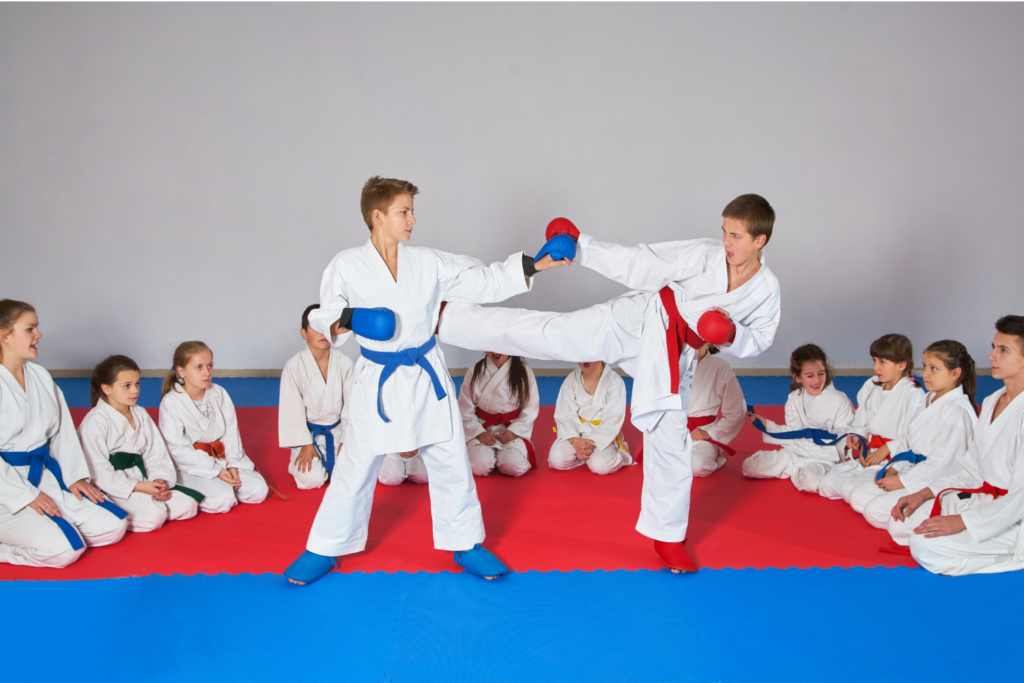
In your dojo, you control who spars whom. Students know each other, instructors match size and skill, and supervision is constant. At a martial arts tournament, competitors from different karate schools meet for the first time, fight at maximum intensity, and push through injuries to advance. Combat sports underwriting treats that environment as amateur sports competition, not instruction, and many general liability policies exclude it outright. A student gets injured in a bracket match, and the injury claim lands on an event the policy was never priced to cover.
The Coverage Gaps That Surface on Tournament Day
Even owners who accept the location problem often miss the other gaps that open the moment the doors open. A tournament stacks exposures the way a class never does.
When a Full-Contact Injury Exceeds What Martial Arts Insurance Covers
A serious injury at a tournament generates medical bills, legal defense costs, and often a settlement demand that exceeds the coverage limits of a school policy. General liability insurance responds to claims from spectators and third parties, but injured competitors frequently fall under participant injury rules, which many standard policies treat differently or exclude. If a student claims your instruction or your bracket supervision caused the harm, professional liability questions follow, and a school policy built for teaching may not answer them. One single injury can consume the entire limits of liability on a policy sized for a quiet dojo.
Spectators, Vendors, and the Venue’s Own Demands
Tournament day also multiplies the people on site. Parents fill the bleachers, vendors sell gear in the lobby, and every one of them can file a bodily injury or property damage claim against you as the tournament organizer. The venue will demand proof of insurance, a certificate of insurance naming it as additional insured, and limits of liability that your school policy may not meet. Failing those insurance requirements can cancel the booking before the first bow.
The Insurance Mistakes Gym Owners and Dojo Owners Share
These assumptions are not unique to karate. BJJ gym owners, taekwondo instructors, and gym owners across the combat sports world make the same insurance mistakes, and the consequences look identical.
Assuming Your Landlord or the Sanctioning Body Has You Covered
Some owners believe the venue’s policy responds if someone gets hurt. It does not. The venue’s insurance protects the venue, and its carrier will actively pursue whoever caused the claim, which is you. Others assume the sanctioning body’s event insurance covers member schools, but those programs typically cover the organization, not each host. The most common error of all is trusting that a signed waiver closes the gap, when courts routinely look past releases to the duty of care the school still owes its students. Choosing the right insurance starts with abandoning these assumptions.
What Event Insurance for Combat Sports Actually Protects
A dedicated event policy closes every gap the school policy leaves open. Event liability coverage responds where the tournament happens, covers the competitors and spectators the school policy excludes, and satisfies the venue’s certificate demands. Understanding what martial arts insurance covers for tournaments is the first step, and comparing it with your current school coverage through the martial arts schools and studios program shows exactly where one ends and the other begins.
Choosing the Right Insurance for Karate, Taekwondo, and BJJ Events
The martial arts you teach shapes the coverage you need. Karate and taekwondo point sparring carries different risks than BJJ submission grappling or MMA events, and the right insurance provider matches the policy to the discipline. Ask your insurance provider whether your school policy extends to hosted events, request the tournament policy as a separate layer, and keep both certificates on file. That combination gives every tournament organizer the peace of mind they need before the first match begins.