What Happens When a Student Uses What You Taught Them Outside the Dojo
The call comes on Monday morning. A student was in a fight over the weekend; someone got hurt, and the techniques worked exactly as taught. That is the problem. Martial arts training is designed to travel beyond the dojo, and the same transfer that builds discipline and confidence creates a liability question when the skill lands on someone who never consented to be a training partner.
Why Martial Arts Training Is Built to Travel Beyond the Dojo
Training is supposed to show up in daily life. That design is what makes the misuse question real for every martial arts school.
The Skill, Discipline, and Mental Focus That Transfer to Everyday Life
The legitimate transfer is real and worth celebrating. Students carry the skill, the discipline, and the mental focus of training into work, school, and personal life. Conditioning builds resilience. Meditation and breathing practice build composure in stressful situations. The structure of consistent effort, belt progression, and accountability transforms a scattered beginner into a practitioner with mental clarity and decision-making under pressure. Every instructor has watched training reshape a student’s everyday life for the better.
The Same Dynamics That Build Confidence Can Escalate a Confrontation
The turn is uncomfortable but necessary. The confidence that transforms a shy student can also change the dynamics of an argument. A practitioner who believes in their capability engages conflicts a cautious person would walk away from. The training that teaches de-escalation in the mind of a master escalates in the hands of an advanced student with something to prove. Skill without emotional control is the exact combination the dojo never intended to send out the door.
When a Practitioner Crosses the Line From Sport to Street
The scenarios share one feature: the training leaves the mat and enters a parking lot, a school hallway, or a bar.
The Real-World Scenarios That Reach Back to the Dojo
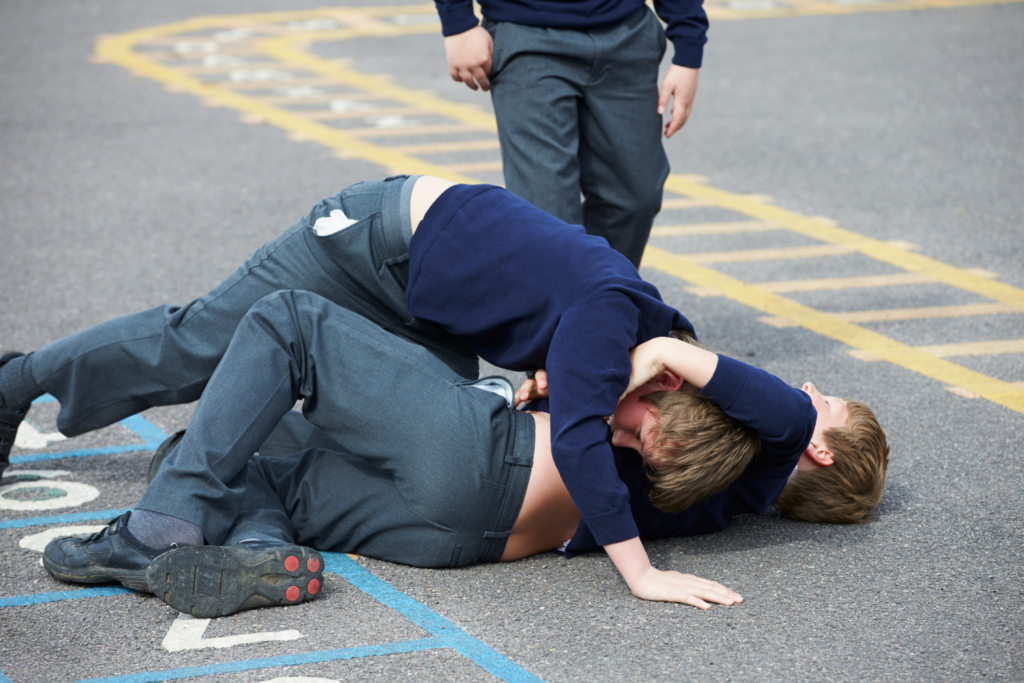
The inventory is familiar. The parking lot fight where a student throws the takedown they drilled last week. The schoolyard incident where a kid uses a joint lock on a classmate. The bar chokehold. The well-meaning student who intervenes in a stranger’s altercation and injures someone while trying to help. In every scenario, the injured party’s attorney asks the same question: where did the skill come from? The answer points back to the dojo.
When Emotional Control Fails, and the Technique Does the Damage
The mechanics explain the harm. Techniques are engineered to work on bodies. A joint lock that taps out a training partner in the gym dislocates a shoulder in a hallway. Sparring happens in a controlled environment with willing participants, padded surfaces, and an instructor watching. The street offers none of that. The engagement was voluntary in one setting and not in the other, and that difference drives the entire legal analysis that follows.
The Liability Question Every Martial Arts School Must Face
Whether the school bears responsibility for off-premises misuse is unsettled law, which is exactly why owners need to understand it before the demand letter arrives.
Negligent Instruction and the Duty That Follows the Student Out the Door
Plaintiffs argue the school taught techniques without teaching restraint, failed to screen students, or ignored warning signs from a student with a temper. The theory is negligent instruction: the duty to teach includes the duty to teach when not to act. Courts have not settled how far that duty extends past the door, and the uncertainty itself is the risk. An unsettled question is exactly the kind a plaintiff’s attorney will answer in their client’s favor, and the liability gaps most schools never see tend to surface in moments like this one.
How the Intentional Acts Exclusion Shapes the Coverage Answer
The insurance reality complicates everything. The student acted intentionally, and intentional acts exclusions sit in most policies. But the claim names the school, not the student, which moves the analysis onto the school’s own liability policy and its terms. The carrier will examine what the school taught, how it screened students, and whether it documented restraint instruction. Teaching people to harm attackers already requires coverage conversations beyond the standard policy, and off-premises misuse raises the same question in a harder form.
What the Dojo Can Do While the Student Is Still on the Mat
The preparation that matters happens before any incident, inside ordinary instruction.
Teaching Restraint as Part of the Structure of Every Class
Restraint belongs in the curriculum, not in a footnote. Teach when walking away is the technique. Make de-escalation part of the framework students learn alongside the drill. Explain that self-defense begins with the decision not to engage. Instructors who document this instruction in lesson plans and attendance records build evidence of responsible teaching. The structure of every class becomes the structure of the defense.
The Master Standard: How Schools Set Expectations for Skill and Mobility
Belt progression works as a proxy for judgment. Set written expectations for control, mobility, and composure at each rank, and make clear that sparring in class is a boundary that does not extend outside it. Schools that master this culture produce fewer street incidents and hold better documentation when one occurs. The master standard is simple: skill and restraint advance together, or neither advances.
When the Call Comes: The School’s Response After the Incident
The student’s weekend fight becomes the school’s Monday morning problem, and the first week shapes everything after.
Notify the insurance carrier early, document what the school knows, and say nothing that assigns blame or admits fault. Preserve attendance records, lesson plans, and any incident history with the student involved. The response sequence looks much like any student injury: document first, notify early, and let the record speak. Early notification preserves coverage, and a calm, documented response demonstrates the standard the school actually kept. Training is built to travel beyond the dojo. The school that prepares for where it travels protects both the student and itself.